by Wonsuh Song (Mulmangcho Japan Representative)
In 2003, a small group called “Asagao-no-Kai” (Morning Glory Association) was formed in Japan. This gathering of neighbors came together out of empathy for the suffering of Shigeru and Sakie Yokota, who lived in the same apartment complex. The Yokotas had dedicated decades to the effort of bringing back their daughter, Megumi, who had been abducted by North Korea. Their story resonated deeply with Japanese society, and Asagao-no-Kai became a symbolic organization supporting them.
The Founding of Asagao-no-Kai
The group began with the voluntary participation of residents living in the same apartment complex as the Yokota family. Having witnessed the couple’s relentless efforts to rescue their abducted daughter, the neighbors felt compelled to help in some way. They started a signature campaign on the streets. As more neighbors joined in, the apartment’s management committee and neighborhood association took the lead, developing the group into an official organization. At the time, the Yokotas were extremely busy, so neighbors often learned more about their situation through media reports than through direct interaction.
The Meaning Behind the Name “Asagao”
The name “Asagao” (morning glory) originates from a pressed flower Megumi sent to Hitomi Soga. The morning glory was one of Megumi’s favorite flowers, and it also carried memories for the Yokota family. Sakie’s brother had collected rare morning glory seeds and planted them each year. The neighbors continued this tradition by planting morning glories annually in their apartment complex, honoring Megumi and watching the flowers bloom in her memory.
Key Activities and Achievements
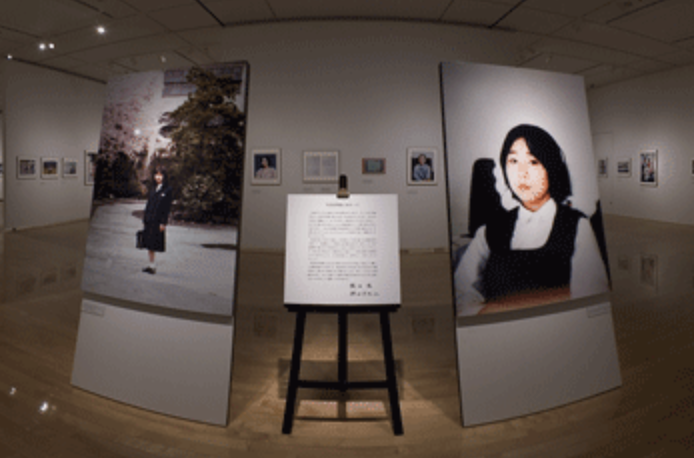
One of the most memorable activities of Asagao-no-Kai is the photo exhibition titled “Messages from Megumi and Her Family,” which began in 2005. Initially, Shigeru Yokota was skeptical, thinking no one would be interested in viewing another family’s photos. However, the first exhibition held during the apartment festival was a success, and the Yokotas realized that their story could reach a broader audience. The exhibition later expanded to venues across Japan and internationally, including Geneva and New York, contributing to global awareness of the abduction issue.
The exhibition helped people feel more connected to the Yokota family, turning the abduction issue from a distant problem into something they could imagine happening to their own children. Through Asagao-no-Kai, the group emphasized that the abduction issue was not just the Yokota family’s problem but a concern for everyone.
Digital Transformation and VR Photo Exhibitions
Since 2017, Asagao-no-Kai has embraced digital mediums, hosting exhibitions in train stations and government offices, as well as online VR photo exhibitions from 2006. These digital initiatives play a crucial role in spreading awareness of the abduction issue to younger generations. By utilizing public spaces such as train stations, they effectively reached individuals who may not have otherwise been aware of the issue.
International Activities and Achievements
Asagao-no-Kai has worked to raise awareness globally by visiting U.S. and Chinese embassies and holding photo exhibitions in Geneva and New York. In Geneva, they had the opportunity to meet with a UN special rapporteur, and in New York, they hosted a lecture featuring the directors of the documentary ABDUCTION. Recently, they also co-hosted a concert at the South Korean embassy, discussing potential collaboration between Japan and South Korea in resolving the abduction issue. Chairperson Satomi Mori reflected on how meaningful it was when then-South Korean Ambassador Yun Duk-min expressed a willingness to cooperate on the matter, noting that international understanding is vital for resolving the abduction issue.
Future Plans and Challenges
As the abductees and their families age, unresolved issues remain, and the volunteers leading Asagao-no-Kai are also facing the challenge of aging. While hosting large-scale photo exhibitions is becoming more difficult, digital exhibitions through advertising media will continue as an alternative. Additionally, the group is planning a concert titled “Hibiki,” which will feature violinist Naoya Yoshida, a classmate of Megumi, along with a video presentation of Megumi’s story and the Yokotas’ efforts.
Engaging the Next Generation
Chairperson Satomi Mori emphasizes that the abduction issue should not be viewed as a relic of the past. Instead, it is essential to educate younger generations about the broader historical context, including the Korean War, the importance of world peace, and Japan’s wartime atrocities. She also stresses the need for education on normalizing diplomatic relations between Japan and North Korea, which can help raise greater awareness among the youth.
Memories with the Yokota Family
Mori has many memories from her years working alongside the Yokota family. However, the fact that Shigeru Yokota passed away without reuniting with his daughter Megumi has left a deep sadness, as it feels like only half of Asagao-no-Kai’s mission has been realized. She urges the public to continue raising their voices to the government so that Sakie Yokota might be reunited with her daughter before it is too late.
Mori reflects on how the many connections and experiences gained through Asagao-no-Kai have enriched her life. However, Megumi has yet to return, and Mori admits to often feeling helpless. She leaves a final message to the citizens of Japan, asking them to visit the Asagao-no-Kai website and remember that the abduction issue is still ongoing.
By Wonsuh Song (Mulmangcho Japan Representative)