Advancing Earth Science and Gender Equity: An Interview with Dr. Carol A. Finn
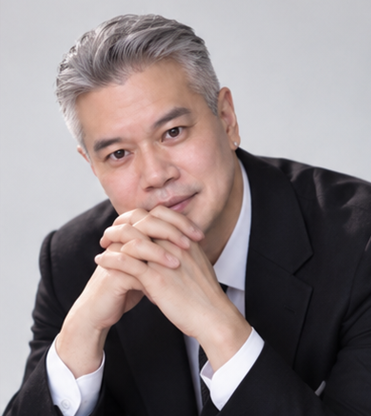
By Wonsuh Song (IGC2024 Organizing committee member)
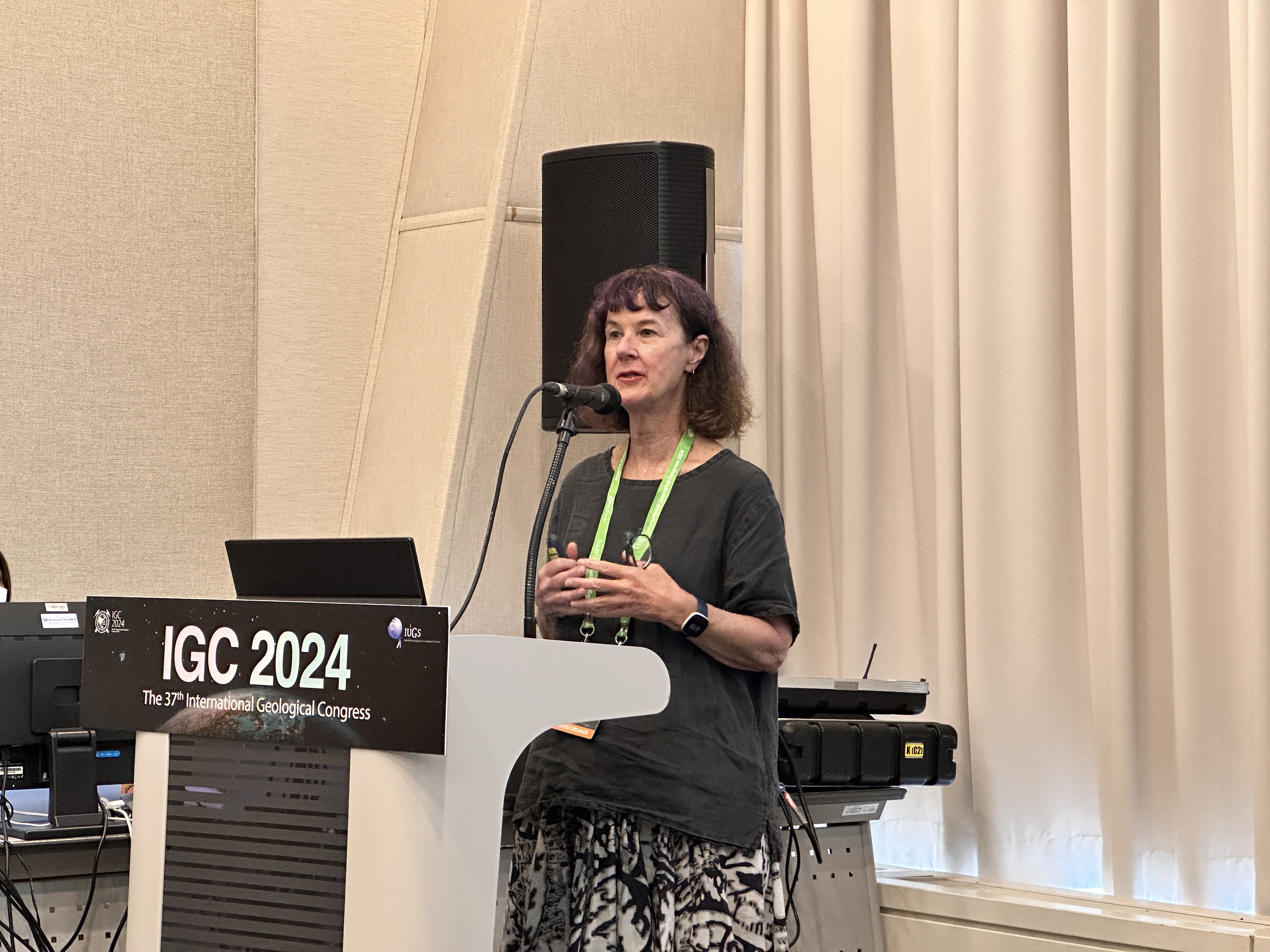
【Busan, South Korea】 — At the 2024 International Geological Congress (IGC) in Busan, Dr. Carol A. Finn, a seasoned geophysicist with the U.S. Geological Survey (USGS), delivered a compelling keynote address on a topic close to her heart: advancing Earth sciences through gender equity and diversity. We caught up with Carol to discuss her journey, her work, and her powerful message on the importance of inclusivity in science.
Q: Carol, thank you for your time. Your keynote on gender equity in science was thought-provoking. Could you share the core message of your talk?
Dr. Carol A. Finn: Absolutely. The core message of my talk is that gender equity isn’t just about fairness—it’s about improving science itself. Diverse teams bring different perspectives and ideas, which lead to more innovative and effective solutions. When fields are not inclusive, there’s a tendency to rely on stereotypes and implicit biases, which can increase harassment and limit the potential for scientific advancement.

Q: You’ve had an extensive career at the USGS. How has your experience shaped your views on gender equity in science?
Finn: My experience as a geophysicist has taken me all over the world, from studying Yellowstone’s thermal features to modeling layered mafic intrusions. Over my more than 40 years with the USGS, I’ve seen firsthand how diversity enriches our understanding of complex geological systems. I’ve also seen how diverse teams contribute to more comprehensive and innovative scientific research, which is crucial for solving complex problems.
Q: Why do you believe diverse teams are more innovative?
Finn: Diverse teams tend to challenge each other more and bring a wider range of experiences to the table. This can lead to discomfort because you’re constantly pushed to think outside your own experiences and biases, but that discomfort is where real innovation happens. When teams are homogeneous, they often stick to what’s familiar, which can lead to routine solutions and a lack of creativity. For instance, I’ve worked with international teams and colleagues from different disciplines, and while it’s often challenging due to different terminologies and approaches, it’s also incredibly rewarding because it forces you to see problems from new angles.
Q: You mentioned some striking statistics about the representation of women in science. Can you elaborate on those?
Finn: Certainly. In the U.S., although women earn about 50% of bachelor’s degrees in science and engineering, their representation decreases significantly at higher levels of education and employment—only about 29% of women remain employed in their scientific fields. Globally, the numbers vary. In New Zealand, for example, women make up 52% of researchers, whereas in countries like Korea and Japan, the numbers are much lower, around 20% and 16% respectively. These gaps are troubling because they suggest that many women are not staying in science due to systemic barriers like bias, harassment, and lack of support.
Q: How do these disparities affect fields like Earth sciences and beyond?
Finn: These disparities have a profound impact. A lack of diversity can stifle innovation and lead to a narrower scope of research. In practical terms, this affects everything from the design of products and technologies to the interpretation of scientific data. For instance, studies have shown that safety equipment like seat belts and personal protective gear often fails to consider female physiology, leading to increased risk for women. Similarly, biased research interpretations can reinforce outdated stereotypes, as we saw with the historical assumption that men were always hunters and women gatherers, which was debunked when more diverse research teams reevaluated the evidence.

Q: How can institutions and professional societies foster more inclusive environments?
Finn: Institutions and societies can implement several strategies to promote inclusivity. First, they need to collect and analyze data on diversity to understand where gaps exist. They should also develop policies that actively promote equity, such as ensuring diverse representation in leadership roles and committees, providing anti-harassment training, and creating support networks for underrepresented groups. The American Geophysical Union (AGU), for example, has made strides in this area by requiring diversity in its nominations and committee appointments and by introducing rubrics for award selection to reduce bias.
Q: What role do you think men can play in promoting gender equity in science?
Finn: Men play a crucial role in this effort. They can help by mentoring women, advocating for their inclusion in research teams and leadership positions, and challenging discriminatory practices when they see them. It’s also important for men to amplify the voices of their female colleagues and ensure that women’s contributions are recognized and valued. Everyone benefits when we have a more inclusive and supportive scientific community.
Q: You’ve also been involved in leadership roles within professional societies. How has that influenced your views on equity?
Finn: Serving in leadership roles, such as President of the AGU and a board member of various organizations, has given me insight into the structural changes needed to promote diversity. For example, we’ve worked to ensure that committees are diverse not just in terms of gender, but also in terms of geography, career stage, and ethnicity. These efforts are about more than just numbers—they’re about creating a culture where all voices are heard and valued.
Q: What advice would you give to young women considering a career in geosciences or other STEM fields?
Finn: My advice would be to seek out supportive mentors and networks, like the Earth Science Women’s Network (ESWN), and to not be afraid to speak up and advocate for yourself. Remember that your perspective is valuable and that diversity is a strength. Don’t be discouraged by the challenges—know that there are many people and organizations committed to making science more inclusive and equitable.
Q: Thank you, Carol, for your insights and dedication to both Earth sciences and gender equity. Any final thoughts?
Finn: I’d just like to remind everyone that achieving gender equity isn’t just about fairness or meeting quotas—it’s about making science better. Our planet faces many complex challenges that require the best possible solutions, and those solutions will only come from a diverse and inclusive scientific community. Let’s all work together to create a more equitable field where everyone has the opportunity to contribute to their fullest potential.
Dr. Carol A. Finn’s work and advocacy highlight the critical need for diversity in Earth sciences and beyond. Her efforts at IGC 2024 and throughout her career serve as a powerful call to action for the scientific community to embrace inclusivity and innovation for a better, more sustainable future.
Dr. Carol A. Finn is a renowned research geophysicist at the U.S. Geological Survey in Denver, Colorado. Specializing in geophysics, volcanic hazards, and mineral resources, she applies magnetic and gravity data to assess geological structures and hazards worldwide. With over four decades at USGS and a Ph.D. from the University of Colorado, Dr. Finn has earned several prestigious awards, including the DOI Meritorious Service Award, and has an Antarctic geographic feature named in her honor.

Interviewer: Wonsuh Song (Ph.D.)
Organizing committee member of IGC 2024
Leadership Development/Governance committee member of AGU
Global strategy committee secretary of JpGU
Lecturer, Shumei University, Japan